
Quantcast
Our Shows
.. Isabella FreeRadio Isabella FreeRadio ….
.. JCast Journey JCast Journey ….
.. Jewish Education Salon Jewish Education Salon ….
.. Jewish Food For Thought Jewish Food For Thought ….
.. Jewish Tech Meetup Jewish Tech Meetup ….
.. Meet Me At The Tzomet Meet Me At The Tzomet ….
.. Oy Vey! Isn’t A Strategy Oy Vey! Isn’t A Strategy ….
.. Rega Shel Ivrit Rega Shel Ivrit ….
.. Schmoozer Schmoozer ….
.. Smorgasbord Smorgasbord ….
.. The Tisch The Tisch ….
.. Two Minutes of Torah with Rabbi Danny Two Minutes of Torah with Rabbi Danny ….
.. Verse Per Verse Verse Per Verse ….


Our Blogs
.. Dia-Tribe (Explicit) Dia-Tribe (Explicit) ….
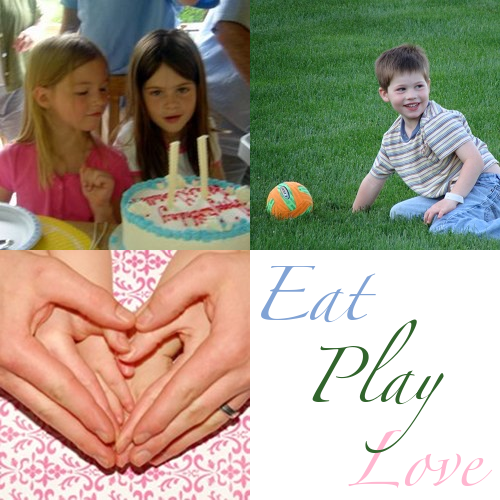
.. Eat, Play, Love Eat, Play, Love ….
.. The Fifth Child The Fifth Child ….
.. Honest To God Honest To God ….
.. Ish Ben Partzi Ish Ben Partzi ….
.. Jewish Educators' Village Jewish Educators’ Village ….
.. Torah Limericks Torah Limericks ….
.. Welcome To The Next Level Welcome To The Next Level ….


About Us
JCast NetworkJCast Network
.. Rabbi Joe Black Rabbi Joe Black ….
.. Rabbi Danny Burkeman Rabbi Danny Burkeman ….
.. Peter Eckstein Peter Eckstein ….
.. Jonah Geffen Jonah Geffen ….
.. Hanan Harchol Hanan Harchol ….
.. Aaron Herman Aaron Herman ….
.. Rabbi Jeremy Kalmanofsky Rabbi Jeremy Kalmanofsky ….
.. Rabbi Leora Kaye Rabbi Leora Kaye ….
.. Rabbi Michael Knopf Rabbi Michael Knopf ….
.. Amichai Lau-Lavie Amichai Lau-Lavie ….
.. Michal Nachmany Michal Nachmany ….
.. Deborah Grayson Riegel Deborah Grayson Riegel ….
.. Rachel Jacoby Rosenfield Rachel Jacoby Rosenfield ….
.. Darone Ruskay Darone Ruskay ….
.. Ilana Ruskay-Kidd Ilana Ruskay-Kidd ….
.. Rabbi Arnie Samlan Rabbi Arnie Samlan ….
.. Sara Shapiro-Plevan Sara Shapiro-Plevan ….
.. Daniel Sieradski Daniel Sieradski ….
.. Eric Sims Eric Sims ….
.. Ronni Sims Ronni Sims ….
.. Ira Wise Ira Wise ….


Partner Organizations
.. Ansche Chesed Ansche Chesed ….
.. Isabella Freedman Isabella Freedman ….


Search
Eat, Play, Love

Enter your email to Subscribe to this Blog:

Click Here  to Subscribe Via RSS


Ilana Ruskay-Kidd

Ilana Ruskay-Kidd is the Director of The Saul and Carole Zabar Nursery School at the JCC in Manhattan.  She has been working at the JCC since 2001 and has been the Director of the school since 2006.  Ilana was born and raised on the Upper West Side of Manhattan and now lives there with her husband and three children, Gabriella (13), Emma (11) and Daniel (7). 

Read Ilana’s Full Bio

Follow JCastNetwork
Eat, Pray Love

Eat, Play, Love

Since taking the position of Director of the Saul and Carole Zabar Nursery School at the JCC, Ilana has written a weekly message to the families. In it, she shares her thoughts on education, Jewish life, family life and the perils of caring. Her messages have resonance for a larger community, so we share them with you. We would love your thoughts, responses, comments to these messages.

Friday
May252012

What's In Your Child's Backback

This weekend Jews throughout the world celebrate Shavuot, a somewhat unknown holiday as it occurs towards the end of the year (so often ignored in Hebrew School curricula) and before the summer (and thus not celebrated in Jewish summer camps!). But in fact, Shavuot is a major Jewish holiday. Shavuot, the “Feast of Weeks,” is celebrated seven weeks after Passover and although its origins are to be found in an ancient grain harvest festival, Shavuot has been identified since biblical times with the giving of the Torah. It in many ways marks the time when we become a people. Until this point the Israelites were nomads in the Middle Eastern desert, slaves serving the Egyptians and then meandering in an extremely circuitous journey through the desert. Shavuot celebrates the arrival of the Jewish people at Mount Sinai, and the acceptance of the Torah, the basis for all of our laws and our communal narrative.

Celebrating Shavuot on the brink of year-end feels extremely fitting as we too are completing a journey. The children, the teachers, and all of you have been on a journey of nearly 40 weeks. Over this time your children have grown so much – physically, emotionally, socially and intellectually. It is incredible to watch this transformation occur. And no matter how many years I witness the growth, I continue to be awed by what occurs. With the potent combination of gifted educators, supportive peers, loving parents, quality materials, time, patience, natural development potential which is programmed into our very DNA, and a great deal of good fortune, your children flourish. It is a spectacular set of ingredients which combine together in front of our eyes.

When the Jewish people received the Torah, their journey did not end. For after receiving the Ten Commandments along the foot of Mount Sinai, the Jews then had to figure out how to live with these rules. How were they going to take what they were given and then actually use it? In many ways your children (and you) will have a similar challenge. The children have had a strong, growing year with many lessons learned, skills acquired, theories developed, friendships built. But now what? How are they (and you) going to help to build on these? How are you going to talk about the time you have spent here this year and what learnings do you want to continue to take with you?

There are some Rabbis who explain that after Moses broke the first set of tablets containing the Ten Commandments, they put the shattered stones into an ark and carried them with them through the next leg of their journey. One way of understanding this choice was that it served as a reminder to the Jewish people – perhaps of their mistakes when they built the Golden Calf, perhaps of what happens when we lose our temper, as Moses did when he first returned from Mount Sinai to discover his people all dancing around this Golden Calf, or perhaps it served as a reminder that God stays close even when we mess up. What challenges did you or your child face this year? How can you carry your shattered stones (the memories and the lessons) with you as a source of inspiration and learning moving forward? It can be very powerful to remind your child at some later date that they successfully navigated a challenging social situation, or that they struggled at first to write their name but that with hard work and patience, they were able to succeed. And as parents, perhaps our child had a teacher who at first we didn’t like but then grew to see as an advocate for our child. Perhaps our child was separated from a close friend from the prior year but then successfully made new friends. How did we support our child through the bumps this year and what did we learn through this experience? Can we remember this the next time we face similar bumps?

Your children’s backpacks are full. They have so many lessons packed away – they have grown in their curiosity, responsibility, confidence, resourcefulness, flexibility, stamina, appreciation, kindness, care of others, respect for nature, and appreciation for their world. Your children now have stowed away in their packs a formative experience of trusting a group of peers and teachers - they have learned together, laughed together, and shared their dreams and fears. In their packs they have warm memories of celebrating Shabbat and holidays, eating Challah and cooking special treats. They have experienced the enormous benefits of being a part of a group, and probably also some of the challenges – perhaps even a few scratches or bruises that can come from sharing a room with other young people! But hopefully all of these experiences and memories will help them take their next steps on their travels, carrying forward their lessons from this leg of the trip.

Over this long holiday weekend take some moments to celebrate what is in your child’s backpack and what has been recently added to your own as well. I hope that you will find that indeed you are all prepared for the road ahead.

Shabbat shalom and happy Shavuot and Memorial Day

Friday
May182012

Light One Candle

It has been a full and beautiful week here at our school. We welcomed literally hundreds of special visitors on Tuesday and Wednesday into our classrooms and also hosted the annual JCC Benefit here in our building on Tuesday night - a great celebration of the JCC’s 10 year anniversary since we first opened our doors on 76th street. I was especially proud to have so many visitors enjoy the amazing work of our children in the gallery space over the course of these past few days. It has been a month of celebration indeed, and soon we will begin to have our end of year celebrations – which is hard to believe! Among the many celebrations of this season was Mothers Day, and I hope that all you moms out there enjoyed the day. For me, it was not so simple…

“You can still celebrate your mom, even if she is dead,” my seven year-old Daniel reminded me last Sunday morning. I woke up on Mother’s Day feeling melancholic. The day is always somewhat fraught for me. “What do you mean?” I asked Daniel. “Doesn’t Mothers Day make you feel sad?” “It does,” I explained, “I miss my mother who died 14 years ago, but it is also a day that makes me happy,” I added. I so love being a mother and I am to have a day designated for celebrating being a mother. But I do miss my mother, I confessed. Daniel responded: “That’s why I am saying you can still celebrate her and remember her because she was your mother.” It was a new way of thinking about the day. Could I use the day to celebrate rather than just feel the longing and missing of all that was lost with the death of my mother?

As I sat at the kitchen table last Sunday morning we began to talk about my mother. Daniel wanted to know whether she was like me, how we were different, and whether she was nice. As I worked to find words to communicate who she was to me, and what she might have been for Daniel and my two daughters, my eyes welled up with tears. Daniel suggested, “I think we should light a candle for her.” I understood that he meant the yahrzeit candle, the memorial candle that is traditionally lit on the Hebrew anniversary of a person’s death and on Yom Kippur, Sukkot, Passover and Shavuot. When I tried to clarify when we usually light this candle, he understood but suggested nonetheless we could light one today too. I acknowledged the idea, but we moved on.

We muddled through Mothers Day. Parts of the day were joyful and easy. Other moments were harder. As I watched mothers and grandmothers walking through Central Park and waiting on lines for brunch, I couldn’t help but feel a twinge of jealousy, as my mind wandered to imagining a brunch with my mother and my children together. We never had that opportunity as she died when I was pregnant with my eldest daughter. Instead on Mothers Day, my patience is in short supply and I am more easily upset by small aggravations. I am also more judgmental of my own shortcomings. Who doesn’t want to be a model mother for one’s children on Mothers Day?

Sunday evening at dinner my family took out some beautiful cards and gifts for the occasion. Along with beautiful earrings made by one daughter, and some heartfelt cards, Daniel presented me with his gift. “This one was my idea” he proudly shared. I unwrapped a beautiful candle from the Metropolitan Museum’s gift shop. He had convinced my husband to rush to purchase a candle while I was in a yoga class. Daniel chose this candle for its fragrant smell and green floral pattern on the glass container. It is truly a beautiful candle. That evening we came home and he helped me light the candle before he was tucked into bed. All evening I kept this candle by my side, and have continued to light it through the week. I’ve tried to use this candle as a reminder to celebrate my mother – and also the beautiful family that I have now. My mother taught through her example about loving and appreciating the magnificent people in one’s life. Whether you have lost a mother or simply mourn the mother that you never had, if we can turn our mourning into celebrating what we do have, we will no doubt have a day filled with more light and gladness.

Wishing you a Shabbat Shalom,

Ilana

PS Last weeks came upon this piece about motherhood and I thought you might enjoy…


Am I Mom Enough? A Motherhood Wish List
Posted by Kara Baskin

It’s so tempting to get riled up by the Mommy Wars, isn’t it? The Time magazine cover story about extreme parenting, Are You Mom Enough?, featuring a beautiful mother in skinny jeans nursing her preschool-aged son, is infamous by now. It made me, along with the rest of the Internet, explode with righteous indignation. Mom enough? How dare they! This isn’t a contest! But, wait … what if it is? And I don’t even own skinny jeans!

The story also made me think about what I wanted to teach Andrew—I mean really teach him. I’m not talking about the trendy must-dos that crop up each year about feeding and sleeping and discipline, insecurity porn concocted just in time to fill a fresh generation of parents with self-doubt. No, I’m talking about the things that I want to impart in average, totally inextreme moments, when my breasts are covered and my skinny jeans are in the wash.

Here’s my wish list.

I hope I raise a child who says “thank you” to the bus driver when he gets off the bus, “please” to the waiter taking his order at the restaurant, and holds the elevator doors when someone’s rushing to get in.

I hope I raise a child who loses graciously and wins without bragging. I hope he learns that disappointments are fleeting and so are triumphs, and if he comes home at night to people who love him, neither one matter. Nobody is keeping score, except sometimes on Facebook.

I hope I raise a child who is kind to old people.

I hope I raise a child who realizes that life is unfair: Some people are born rich or gorgeous. Some people really are handed things that they don’t deserve. Some people luck into jobs or wealth that they don’t earn. Tough.

I hope I raise a child who gets what he wants just often enough to keep him optimistic but not enough to make him spoiled.

I hope I raise a child who knows that he’s loved and special but that he’s not the center of the universe and never, ever will be.

I hope I raise a child who will stick up for a kid who’s being bullied on the playground. I also hope I raise a child who, if he’s the one being bullied, fights back. Hard. Oh, and if he’s the bully? I hope he realizes that his mother, who once wore brown plastic glasses and read the phonebook on the school bus, will cause him more pain than a bully ever could.

I hope I raise a child who relishes life’s tiny pleasures—whether it’s a piece of music, or the color of a gorgeous flower, or Chinese takeout on a rainy Sunday night.

I hope I raise a child who is open-minded and curious about the world without being reckless.

I hope I raise a child who doesn’t need to affirm his self-worth through bigotry, snobbery, materialism, or violence.

I hope I raise a child who likes to read.

I hope I raise a child who is courageous when sick and grateful when healthy.

I hope I raise a child who begins and ends all relationships straightforwardly and honorably.

I hope I raise a child who can spot superficiality and artifice from a mile away and spends his time with people and things that feel authentic to him.

I hope I raise a child who makes quality friends and keeps them.

I hope I raise a child who realizes that his parents are flawed but loves them anyway.

And I hope that if my child turns out to be a colossal screw-up, I take it in stride. I hope I remember that he’s his own person, and there’s only so much I can do. He is not an appendage to be dangled from my breasts on the cover of a magazine, his success is not my ego’s accessory, and I am not Super Mom.

I hope for all of these things, but I know this: None of these wishes has a thing to do with how I feed him or sleep-train him or god-knows-what-else him. Which is how I know that these fabricated “wars” are phony every step of the way. I do not need the expensive stroller. I do not need to go into mourning if my “sleep-training method” is actually a “prayer ritual” that involves tiptoeing around the house in the dark. This is not a test. It’s a game called Extreme Parenting, and you can’t lose if you don’t play. And, really, why would you play? You have children to raise.

Friday
May112012

Respect and Dignity in the Classroom

When I was in second grade I had a teacher who yelled. My teacher, Mrs. P, teased, she mocked and she embarrassed my classmates when they didn’t have the right answers. I often had the right answers, and the material that she taught came rather easily to me. But I remember feeling guilty. It never seemed fair that some of the other children worked so hard to get past that first reading level while I proudly moved through the rainbow of Early Readers. I would watch as Mrs. P conducted group lessons. She would use the strong students to embarrass the others, asking them why they didn’t know the answer if others had clearly mastered the material? She would pick on many of the students within the class (mostly the boys!) but one boy particularly stands out in my memory. Andrew was seated in the front row, working attentively to keep up - but he struggled. I squirmed as Mrs. P would mock Andrew as he would attempt to keep up. She would embarrass him, she would catch him off guard, and as he grew increasingly flustered, the correct responses fled further from his mind. Poor Andrew was trying his best, but his best was simply not good enough for Mrs. P.

This experience in 2nd Grade was in some ways perhaps, my first “calling” into the world of education. The first pedagogical lesson that I learned was that the way that a teacher treats the “worst” child in the class is the way that they have treated all of the students in the class. While I was never a direct victim of Mrs. P’s temper and mocking, I too experienced a stomach ache, felt bad for my friend Andrew, and was no doubt fearful that one day it might be me. If a teacher is somehow allowed to treat a classmate this way, who is to say that children cannot treat one another in that very same manner? And to the extent that chidren feeling safe is a key component to learning, there is no doubt that the climate of this classroom had a negative effect on the learning within the classroom.

The other powerful lesson that I experienced that year was that we are not all the same. We did not all find it equally easy to read that first chapter book, master the multiplication tables, or develop meaningful friendships. Children learn to read at 3, at 5 or at 8 - some with great ease and some with enormous effort. Children (and adults) are each unique, and we are each born with our own set of strengths and challenges. When we begin to understand ourselves and our children in this way, we are able to truly respect one another. We are all of equal importance and equal value, but we are not all the same. We must acknowledge and celebrate these differences if we want to truly honor and value one another.

Were Mrs. P to have acknowledged that Andrew was struggling to learn the material, she could have helped him rather than blamed him. Any good teacher would have wanted to help this little boy achieve the developmental and learning milestones of his 8-year old peers. But he might have needed a different setting, he might have needed a chance to digest the lessons in the quiet of his house, he might have needed to use cubes or even his fingers to unlock the challenges of multiplication. The shaming and the yelling brought him no closer to mastering the material, and it only made him feel small. This teacher also failed to honor and recognize all of Andrew’s strengths. Andrew was kind, he was sweet, he was handsome, he was one of the only boys who talked to the girls, he was a great artist, and he was hard working. Andrew had to show far more grit and perseverance than I did that year, as I whizzed through the work.

Acknowledging and appreciating differences is not easy. At our school we are asking our children, our teachers and our parents to create a world that is very different from my 2nd grade classroom. In the world we are trying to create, each child brings something unique to the classroom community. In this world, children know that a teacher may allow one child to sit on a chair during meeting while others are expected to sit on their own on the rug. In this world, we know that some children can write their names with ease, or draw a self-portrait with multiple details, while another struggles to grasp the writing implement. In this world there are students who come to school with special help (SEITS - special education itinerant teachers) and there are students who go to speech therapists to help them find their words. It is a complex world our children live in, but I believe that we are going to raise children who will be better teachers, better parents, better employers, better employees and better partners, because they will understand that while we are not all the same, we all deserve respect and dignity.

Shabbat Shalom


Friday
Apr272012

On Counting

This is the season of counting. We count how many more days of school, how many days until camp, how many more shabbat celebrations in our child’s current classroom, and how many more days we need to bundle our children in jackets before Spring emerges for good. It is also the season of counting in the Jewish calendar. There are 49 days between Passover and Shavuot and the tradition is to count these days, referred to as the “Omer,” each evening. We are told not only to count the number of days but also to translate this into weeks and days. So, for example, yesterday was the 20th day of the Omer, which was 2 weeks and 6 days. Why this tradition of counting? Why do we need to belabor this counting and to be so explicit about exactly where we are in this process?

Children often ask questions about space and time: How many more blocks to school? How much longer until we get to the airport? How many more carrots do I need to eat? How many more minutes of TV can they watch? How many days till my birthday? And again, how much longer till we get there? They ask and ask! And as adults it can feel like they have asked but a moment ago, and yet they ask again. Is this because they have a different sense of time and distance? Is this because they have less prior experience of what “an hour” or “a block” is? Is it a way for them to express their frustration or boredom without actually complaining? Or are these questions a mechanism for them to understand their world, just like most questions they ask?

There are probably many reasons why children count and quantify. But why does our Jewish tradition create this cycle for our community to count? One obvious answer is that we count as a way of expressing our excitement. The holiday of Shavuot is the festival that marks the time when the Israelites become a coherent and cohesive people. It is a celebration of Moses going up to Mount Sinai and returning with the Ten Commandments, the Torah, and many of the rules and regulations that continue to serve as the central source of our tradition. Maimonides points out that the counting of the Omer is suggestive of the anticipation felt by a person who expects his or her most intimate friend on a certain day. That person counts the days, and even the hours. Like our children who count down till camp (61 days, 12 hours and 7 minutes in my house!) or their birthday, we express our enthusiasm and focus our attention on the special time.

Another reason to count is to prepare. When we are pregnant and awaiting the birth of a child, we count weeks so that we can get ready. These weeks serve as cues: at 7 weeks we hear a heartbeat, at 12 weeks we may experience less morning sickness, at 24 weeks we do a glucose test, at 37 weeks the baby is considered full term. The counting helps us to pace ourselves so that at the moment of arrival we are prepared. Likewise, when Jews count the days of the Omer there is an expectation that there is some internal preparation taking place. We are being asked to consider the big implication of being “the people of the book.” And if you follow the Jewish tradition whether closely or more loosely, these weeks are a time to wrestle with our relationship to these laws and rules. Does Shabbat mean anything to you or to your family? Has it changed in the past year either because of a shift in you or a deeper connection that your child may experience towards this tradition? Do you like the relationship that you currently have to these ancient rituals? Is there some way in which you would like to extend your own personal or family relationship to any part of the tradition? I would like to suggest that perhaps the reason that there are seven weeks between Passover and Shavuot is that these questions are big ones. Considering our connection to our tradition and its laws and customs is not a small task and whether you are deeply involved on a daily basis with Jewish laws or only twice a year, the questions are always complicated. And as parents of young children, it is no doubt a dynamic time. Our children keep changing, our family life and rhythms keep changing, and if we are lucky, we remain somewhat alert and mindful of this shifting ground.

The holiday of Shavuot and the days of the Omer were originally deeply connected to the harvest season. In fact, the word “Omer” means sheaves of wheat. The Omer period coincides with the season when fruit ripened, and thus the fate of the season’s crops was determined. If we think of these next weeks as a time of ripening, a time when we come into fruition, we can see this season as a time of possibilities. This counting, this keeping track of time, can be seen as a period to focus our attention on our own ripening and the ripening of our children. We can easily see how our children bloom - they have grown so much over these past months and we have a few more weeks in this season. But we too have grown as people and as parents. The season ahead will no doubt bring new fruits. I would love to invite you all to enjoy the ripening, enjoy the developing, the unfolding, and the counting…

Shabbat Shalom,

Ilana

Friday
Apr202012

You Get What You Get...?

Welcome back to school. I hope that everyone had a restful vacation and a meaningful Passover holiday. I appreciated the time off and my own Passover celebration. I was particularly moved this year by the ways in which my own children have become increasingly engaged in this holiday and the multiple ways that their involvement enhances my own experience of the holiday. I was also deeply gratified to hear so many of you share with me ways that your children brought home all that they learned about Passover into your homes and your holidays.

“You get what you get and you don’t get upset.” How many times have you heard this chant? It is an often used expression that signals our expectation that children should not complain when they receive the blue ball instead of the red, when they get a chocolate donut instead of a vanilla one and on and on. And for many, this expression is just an expected part of early-childhood teaching and parenting. But several years ago we had a parent in our school who helped us focus our attention on the problems with this seemingly innocuous expression. She asked, why aren’t children allowed to get upset? Isn’t it reasonable that they experience disappointment when they receive a balloon that is not their favorite color? Don’t we expect that children might wish that they could sit next to their closest friend during meeting time rather than in the spot the teacher has assigned them? We ourselves prefer one flavor over another. So why would we tell them not to be upset?

Through this conversation we realized that we needed to find language that communicates that our focus is not on telling children that they shouldn’t have their feelings but rather on how we expect children to manage these sometimes difficult feelings. One alternative formulation might be: “You get what you get and you manage your upset.” While this expression never took hold within our school, this sensibility is certainly an important one within our school. Children do feel angry, they do feel jealous, they do feel disappointed. And we want very much for children to feel safe enough to acknowledge these feelings. At the same time, feeling angry is not an excuse to hit another child, feeling disappointed or jealous does not allow for a child to yank a friend’s toy from their hands. Our goal instead is to help children recognize their feelings, find words for them, and then find productive ways to manage them.

Now as I was writing this newsletter my son began to ask about what I was writing. When I described the search for an alternative message he suggested, “you get what you get and you move on!” He clearly articulated a part of what we as parents and teachers are asking of our children - you can have your feeling but you do also need to move on, to bounce back. That is not to say that the feeling needs to go away; it is valid and may need to be explored. But sometimes it is our job as parents and teachers to encourage children’s resiliency and to express our confidence in their ability to manage their feelings, take next steps, and successfully move along with the group or the activity.

While we demand that our children show flexibility, when expressing any sentiment that begins “you get what you get…” my son asked me, “Why can’t parents just give the child what they want sometimes? Then the children might not get upset at other times.” This brings to mind that there is a flexibility that we as adults must also show. Sometimes when we say “you get what you get and you don’t get upset” we are really saying: we don’t have the patience to give our children what they want, or the time, or we don’t have an understanding of why these small differences are important. But we, too, can get rigid and stubborn. Why can’t we strive sometimes to help our child find a particular color of marker to complete their final strokes on their masterpiece? Why can’t we let them wear the sweatshirt they had in mind even if it doesn’t match quite as well? Why can’t we read the same story for the 100th time rather than reading the new book that their grandmother bought them? Part of what children are doing as they grow is finding and exercising their autonomy, developing their viewpoint, and exercising their sense of control. And when we as adults exert our own right to have it our way in the name of being “reasonable” or “efficient,” we may needlessly deprive our children of their need to grow and develop.

It is not easy to get this balance right. We don’t want to over-empower children. We want to give children permission to have their feelings, while at the same time communicating our faith and expectation that they can also manage these feelings and move on when appropriate. We also must strive to manage our own rigidity and desire to be “right” or “in charge” in order to help our children develop a sense of autonomy. Not an easy balance!

Tonight, after a long day I discovered that my daughter needed a quick visit to the doctor for an infected finger. If someone had said “you get what you get and you don’t get upset” I would not have taken well to it! I had perspective, it wasn’t a big deal, but it was not the evening I had hoped for. And when my husband said “I am so sorry that you had to shlep out tonight. That sounds very annoying. Thanks for taking care of it.” I felt better. It did not change the facts, it did not make the line at Duane Reade move quicker, but it gave me room to have my feelings and then I was better able to manage my upset!

Wishing you a peaceful Shabbat,

Ilana